Building a Hybrid AI Marketing Workforce: A Practical Checklist
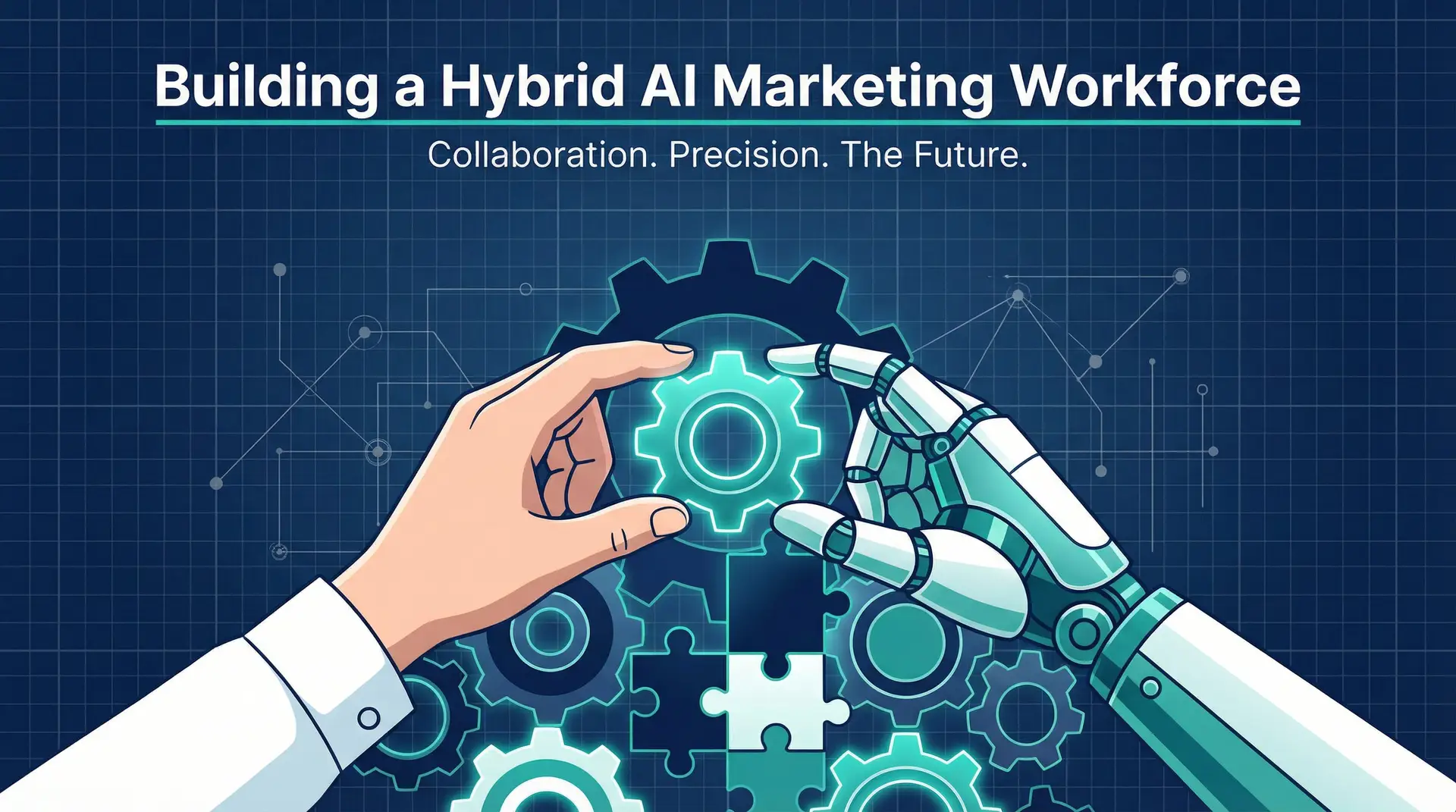
The marketing team of the past is obsolete. For years, we’ve talked about the “future of work,” but in 2026, that future has arrived. We are in the era of the hybrid workforce—not just a mix of remote and in-office employees, but a seamless collaboration between human talent and artificial intelligence. For marketing leaders, this isn’t a trend to watch; it’s a competitive necessity to embrace.
But how do you actually build an AI marketing team that effectively integrates AI? It’s not as simple as buying a few software licenses. It requires a fundamental shift in mindset, a redefinition of roles, and a clear, step-by-step implementation plan. This article provides that plan: a practical, 7-step checklist for transforming your marketing department into a high-performance Hybrid AI Marketing workforce.
The 7-Step Checklist for Building Your Hybrid AI Marketing Team
Step 1: Audit Your Current Marketing Workflows
Before you introduce any AI, you need a crystal-clear picture of where you are now. Map out every marketing process, from content creation and social media management to lead nurturing and reporting.
- Identify Repetitive Tasks: Which tasks are manual, time-consuming, and rules-based? These are your prime candidates for AI automation.
- Pinpoint Bottlenecks: Where do processes slow down? Where are errors most common? AI can often resolve these pain points.
- Document Everything: Create a detailed map of your workflows. You can’t optimize what you don’t understand.
Step 2: Define Clear Roles for Humans and AI
This is the most critical step. The goal is not to replace humans but to create a clear division of labour where each does what they do best.
- AI Excels At: Data analysis, pattern recognition, personalization at scale, A/B testing, scheduling, and repetitive task execution.
- Humans Excel At: Creative strategy, brand storytelling, empathy, complex problem-solving, relationship building, and ethical judgment.
- The Golden Rule: AI handles the data and the drudgery; humans handle the creativity and the connection.
Step 3: Select the Right AI Marketing Tools
The market is flooded with AI marketing tools. Don’t try to adopt everything at once. Focus on tools that directly address the bottlenecks and repetitive tasks you identified in Step 1.
- Start with High-Impact Areas: Email automation, CRM management, and social media scheduling are often the best starting points.
- Prioritize Integration: Choose tools that integrate seamlessly with your existing tech stack. Siloed tools create more problems than they solve.
- Consider an All-in-One Platform: Platforms like Ascendea’s AI-powered CRM can consolidate multiple functions, reducing complexity and cost.
Step 4: Invest in Upskilling Your Team
Your team needs to be comfortable working alongside AI. This requires investment in training and a culture shift.
- AI Literacy Training: Ensure every team member understands what AI can and cannot do. Demystify the technology.
- Prompt Engineering: Train your content creators and strategists on how to effectively direct AI tools to get the best output.
- New Role Creation: Consider creating roles like “AI Marketing Coordinator” or “Automation Specialist” to bridge the gap between the technology and the team.
Step 5: Implement a Pilot Programme
Don’t try to transform your entire department overnight. Start small with a pilot programme.
- Choose One Workflow: Select a single, well-defined workflow to automate or augment with AI (e.g., email lead nurturing).
- Set Clear KPIs: Define what success looks like before you start. Is it faster response times? Higher conversion rates? Reduced manual hours?
- Measure and Learn: Track the results meticulously. Use the data to refine your approach before scaling.
Step 6: Establish an AI Governance Framework
As AI takes on more tasks, you need clear rules of engagement.
- Data Privacy: Ensure all AI tools comply with GDPR and other relevant data privacy regulations.
- Quality Control: Implement a human review process for all AI-generated content before it goes live. AI can draft; humans must approve.
- Ethical Guidelines: Define clear ethical boundaries for AI use in your marketing, particularly around personalization and data usage.
Step 7: Scale and Optimise Continuously
Once your pilot is successful, it’s time to scale.
- Roll Out to Other Workflows: Apply the lessons learned from your pilot to other marketing processes.
- Foster a Culture of Experimentation: Encourage your team to identify new opportunities for AI augmentation.
- Stay Current: The AI landscape is evolving rapidly. Dedicate time to staying updated on new tools and best practices.
The Future is Hybrid
Building a hybrid AI marketing workforce is not a one-time project; it’s an ongoing journey. The companies that will lead in 2026 and beyond are those that view AI not as a threat to their team, but as the most powerful tool in their arsenal. By following this checklist, you can build a marketing department that is faster, smarter, more efficient, and ultimately, more human.
Ready to build your hybrid AI marketing team? Ascendea provides the AI-powered platform and the strategic guidance to make it happen. Let’s talk about your transformation.