For years, the sales development world has been buzzing with the promise of artificial intelligence. In 2026, that promise has become a reality. The debate is no longer about if AI will impact sales, but how profoundly it is already reshaping the landscape. For small and medium-sized business owners, the message is clear: the era of the AI Sales Development Representative (SDR) is not coming, it is here. And the data shows they are not just competing with their human counterparts — in many key areas, they are decisively outperforming them.
This is not a story about replacing people. It is a story about augmenting them. As we have built Ascendea into a hybrid intelligence enterprise, we have seen firsthand that the most powerful model combines the relentless efficiency of AI with the strategic oversight of human expertise. The numbers are compelling, and they paint a picture of a future where sales teams that embrace this hybrid model will gain an insurmountable competitive advantage.
Let us break down the five key areas where AI SDRs are fundamentally changing the sales game in 2026.
1. Unmatched Speed and Scale
The most immediate and dramatic advantage of AI SDRs is their sheer capacity. A human SDR, no matter how skilled or dedicated, is bound by the constraints of time and cognitive load. An AI agent is not.
- Human SDR Capacity: A top-performing human SDR might manage 20-50 high-quality, personalised touchpoints in a day.
- AI SDR Capacity: A single AI SDR can engage with 500 to over 4,000 leads daily, without any degradation in quality or consistency.
This is not just a marginal improvement; it is a paradigm shift. An AI SDR can send more emails in a single month than a human rep might send in over three years. This allows businesses to cover their entire addressable market with a speed and thoroughness that was previously unimaginable. Furthermore, AI agents respond to inbound leads instantly, 24/7/365, capturing prospect interest at its peak — a factor that has been shown to increase lead conversion rates by up to 70%.
2. Radical Cost Efficiency
The financial argument for AI SDRs is just as compelling as the operational one. The total cost of ownership for a human SDR, when factoring in salary, benefits, training, technology, and management overhead, ranges from $75,000 to $150,000 annually. Compounding this is the notoriously high turnover rate in the profession, which can be as high as 35% annually, with replacement costs reaching 150-200% of the SDR salary.
In stark contrast, an AI SDR providing equivalent or even superior output can cost between $15,000 and $35,000 annually. This represents a direct cost saving of 60-75%. The cost per lead plummets from an average of $262 for human-generated leads to just $39 for AI-generated leads. For SMEs, this is not just about saving money; it is about reallocating precious capital from repetitive, top-of-funnel tasks to strategic, high-value activities that only humans can perform.
3. Superior Conversion Rates
Greater volume and lower cost would mean little if the quality of outreach suffered. However, the data shows the opposite. AI SDRs are not just doing more; they are doing it more effectively.
- Response Rates: In a real-world case study, AI SDRs achieved a 6.7% overall response rate, more than double the industry average of 3%.
- Meeting Booking: AI agents are booking meetings at rates of 12-25%, a significant jump from the traditional 6-12% achieved by human teams.
- Lead Qualification: With the ability to analyse millions of data points, AI SDRs achieve a lead qualification accuracy of 85-95%, far surpassing the 60-75% typical for human reps.
This superior performance stems from the AI ability to maintain perfect consistency, personalise outreach at scale, and use behavioural data to optimise the timing and channel of every message. The result is a more relevant and engaging experience for the prospect, which translates directly to higher conversion rates.
4. Unwavering Consistency and 24/7 Availability
Human performance is variable. It is affected by energy levels, health, and the natural ebbs and flows of a workday. AI performance is absolute. An AI SDR executes its programmed strategy with perfect consistency, every single time. It never has a bad day, never forgets to follow up, and never deviates from the brand voice.
This 24/7 availability is a superpower in a global market. An AI SDR can engage a lead in any time zone at the precise moment they show interest, whether that is at 2 PM or 2 AM. This eliminates the costly delays inherent in human-only models and ensures that no opportunity is ever missed due to timing.
5. The Hybrid Advantage: The Best of Both Worlds
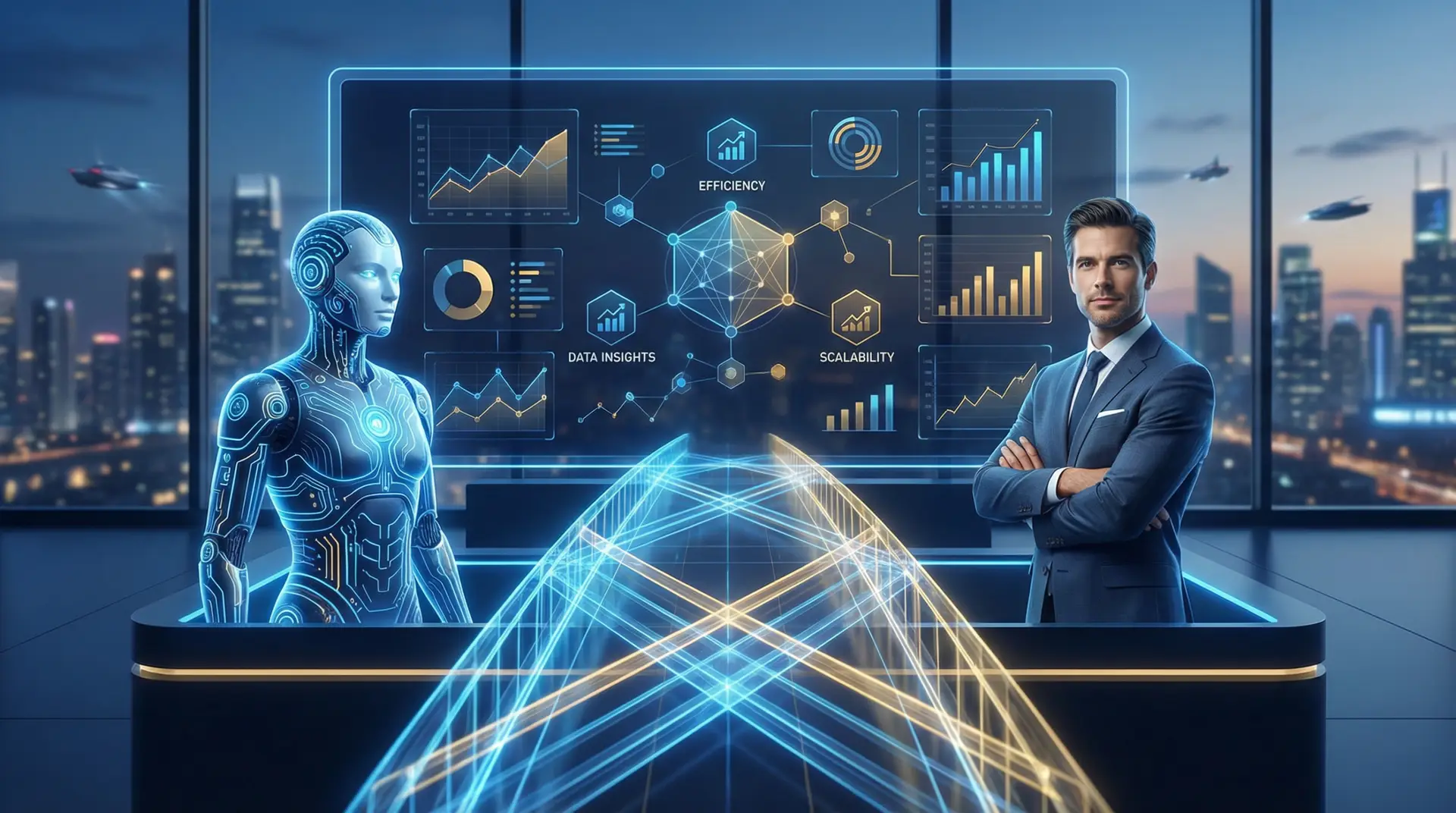
Perhaps the most crucial finding of 2026 is that the ultimate sales machine is not purely human or purely AI. It is a hybrid.
The AI is not truly autonomous. It is a force multiplier for human expertise. — Jason Lemkin, SaaStr
Organizations that combine AI and human teams are seeing revenue growth rates of 83%, significantly outperforming the 66% growth seen by human-only teams. The optimal model uses AI for what it does best: high-volume, data-driven, top-of-funnel activities like lead sourcing, initial outreach, and qualification. This frees up human SDRs to focus on what they do best: building relationships, handling complex objections, navigating organisational politics, and closing high-value deals.
At Ascendea, this is the model we live by. Our AI agents handle the relentless execution, while our human experts provide the strategic direction, the creative oversight, and the final, crucial human touch. This allows us to operate with the scale of a large enterprise and the agility of a startup.
The Path Forward
The data is in, and the conclusion is inescapable. AI SDRs are not a futuristic fantasy; they are a present-day reality that is delivering measurable, game-changing results. For SME owners looking to gain a competitive edge, the question is no longer if you should adopt AI in your sales process, but how quickly you can build a hybrid intelligence team that leverages the best of both worlds. The companies that master this new reality will be the ones that lead the market in the years to come.
Sources:
- Martal Group. (2026, Feb 6). AI SDR vs Human SDR: 2026 Comparison Guide.
- SaaStr. (2025). 6 Months of AI SDRs: What Worked, How They Brought In $1M+ in 90 Days.
- Carden, T. (2025). AI Agents Now Book More Meetings Than Your SDRs. LinkedIn.