Skip to content
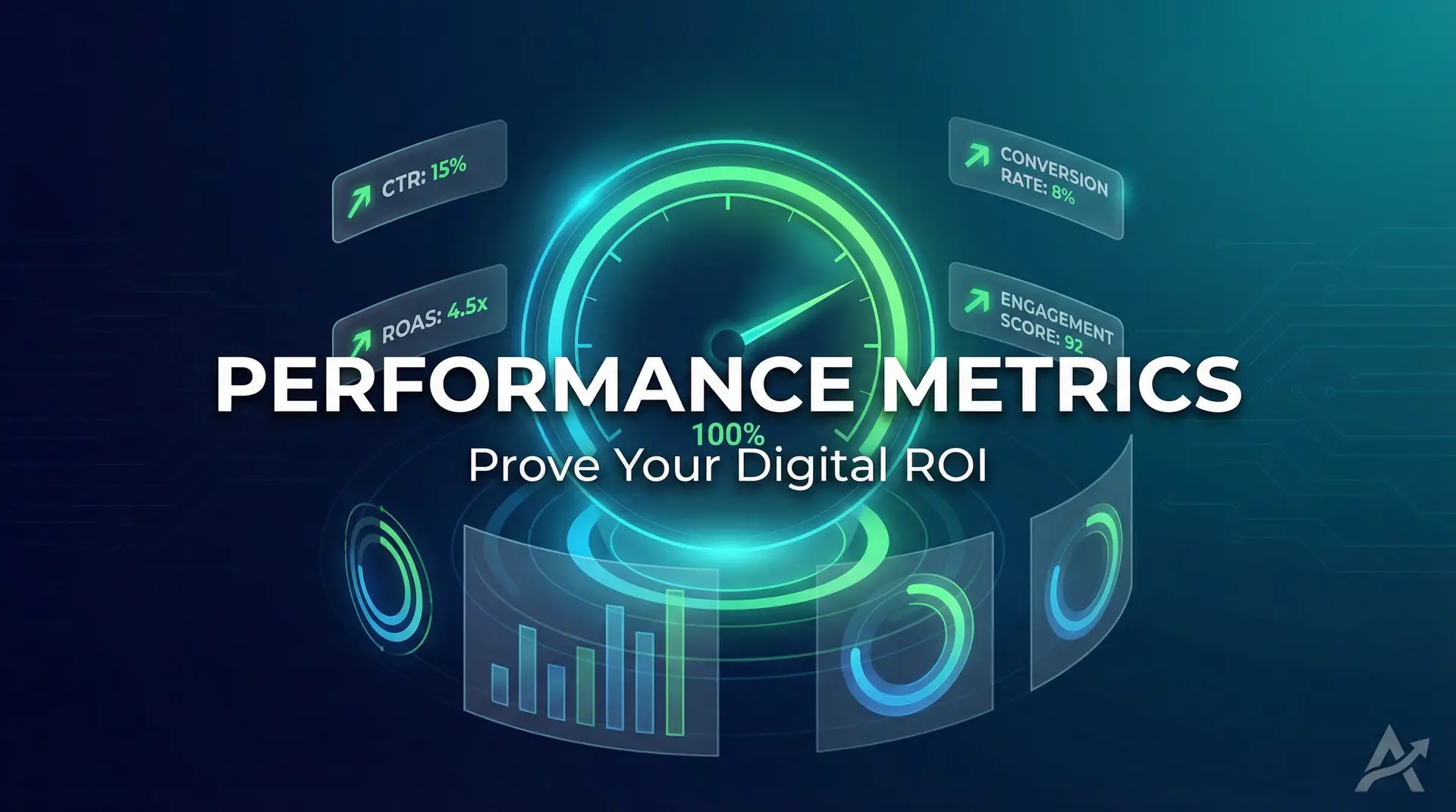
Measuring ROI: Proving Digital Marketing Value with AI for Maximum Impact
In today’s rapidly evolving digital marketing landscape, demonstrating a clear return on investment (ROI) is no longer merely beneficial—it is imperative for businesses seeking to validate and optimize their marketing expenditures. This comprehensive guide meticulously explores the essential metrics and advanced methodologies for accurately assessing ROI, with a particular emphasis on the transformative power of AI-driven solutions. Readers will gain profound insights into effectively tracking performance metrics, calculating ROI with precision, and leveraging cutting-edge AI technologies to significantly enhance marketing outcomes. As companies face increasing pressure to demonstrate tangible value, a deep understanding of these concepts is vital for strategic decision-making and sustained growth. We will systematically explore key digital marketing ROI metrics, robust calculation methods, the pivotal role of AI in elevating ROI, and best practices for presenting compelling analytics to stakeholders.
What Are the Key Digital Marketing ROI Metrics You Should Track?
Tracking the right metrics is fundamental for understanding and optimizing the effectiveness of digital marketing efforts. Key Performance Indicators (KPIs) provide actionable insights into how well marketing strategies are performing and their direct impact on overall business objectives. Among the most critical metrics to monitor are:
- Customer Acquisition Cost (CAC): The total cost associated with acquiring a new customer.
- Customer Lifetime Value (CLV): The total revenue a business can expect from a single customer throughout their relationship.
- Return on Ad Spend (ROAS): The revenue generated for every dollar spent on advertising.
These metrics not only facilitate the rigorous evaluation of marketing campaign success but also critically inform future investment decisions, ensuring resources are allocated for maximum impact.
How Do Customer Acquisition Cost and Cost Per Acquisition Affect ROI?
Customer Acquisition Cost (CAC) encompasses the total expenditure incurred to acquire a new customer, including all marketing expenses, sales team costs, and other related overheads. A consistently lower CAC signifies a more efficient and profitable marketing strategy, directly enhancing overall ROI. Conversely, Cost Per Acquisition (CPA) specifically measures the cost incurred to acquire a customer through a particular channel or campaign. A granular understanding of these costs empowers businesses to meticulously optimize their marketing budgets and significantly improve overall profitability. For example, if a company invests $1,000 to acquire 10 customers, the CAC is $100. Strategically reducing this cost through highly targeted marketing initiatives can dramatically boost ROI.
Why Is Customer Lifetime Value Crucial for Measuring Marketing Success?
Customer Lifetime Value (CLV) is an indispensable metric that estimates the total revenue a business can reliably expect from a single customer over the entire duration of their relationship. This metric is paramount for comprehending the long-term financial value of customer acquisition. A high CLV indicates that customers are not only making initial purchases but are also highly likely to engage in repeat business and demonstrate sustained loyalty. By strategically focusing on increasing CLV through robust customer retention strategies, businesses can achieve a superior ROI. For instance, if a customer yields a CLV of $1,000 and the CAC is $100, the ROI on that customer acquisition is a remarkable tenfold, unequivocally showcasing the profound effectiveness of marketing efforts.
How Can You Accurately Calculate Marketing ROI?
Calculating marketing ROI involves a precise comparison of the incremental revenue generated from marketing activities against the total costs incurred. This calculation provides an unambiguous picture of the financial effectiveness of marketing investments. A thorough understanding of the fundamental formulas and practical application examples for measuring ROI is indispensable for marketers striving to optimize their campaigns for peak performance.
What Are the Formulas and Practical Examples for Measuring ROI?
The foundational formula for calculating ROI is:
ROI = ((Revenue Generated – Cost of Investment) / Cost of Investment) × 100%
Alternatively, often simplified as:
ROI = (Net Profit / Cost of Investment) × 100%
For instance, consider a marketing campaign that costs $5,000 and directly generates $15,000 in revenue. The net profit derived from this campaign is $10,000. Thus, the ROI would be calculated as:
ROI = ($10,000 / $5,000) × 100% = 200%
This compelling result indicates that for every dollar invested, the company realizes a two-dollar return. Leveraging specialized tools and software for automated ROI reporting can significantly streamline this process, ensuring unparalleled accuracy and operational efficiency.
How Do You Interpret ROI Results to Optimize Campaigns?
Interpreting ROI results necessitates a meticulous analysis of the data to identify discernible trends and critical areas for improvement. Marketers must actively seek patterns in successful campaigns and precisely understand which strategies consistently yield the highest returns. Continuous monitoring and agile adjustment of marketing tactics based on profound ROI insights are paramount for developing increasingly effective campaigns. For example, if a particular marketing channel consistently demonstrates a significantly higher ROI, strategically reallocating budget towards that channel can substantially enhance overall marketing performance and profitability.
In What Ways Does AI Enhance Marketing Return on Investment?
AI technologies are fundamentally revolutionizing the way businesses approach marketing by providing sophisticated tools for advanced data analysis, hyper-personalized customer engagement, and dynamic campaign optimization. By strategically leveraging AI, companies can dramatically enhance their marketing ROI through vastly improved targeting precision, unparalleled personalization at scale, and superior operational efficiency.
This strategic allocation of resources is further supported by advanced AI-based marketing mix modeling, which provides dynamic, high-resolution insights for optimizing media spend across diverse channels, ensuring every dollar is maximized.
AI Marketing Mix Modeling for ROI Optimization
In the modern digital economy, marketers face increasing complexity in allocating advertising spend across multiple channels — online search, social media, display, and traditional media — while striving for measurable advertising effectiveness and return-on-investment (ROI). This study proposes a secure, cloud-optimized AI-based marketing mix modeling framework, leveraging scalable cloud infrastructure and machine learning (ML) to deliver dynamic, high-resolution insights into ad effectiveness and to optimize media spend across channels.
Source: Secure AI-Based Marketing Mix Modeling: Cloud-Optimized Machine Learning for Advertising Effectiveness and Digital Media Analytics, 2025
How Do AI-Powered Tools Improve Lead Generation and Customer Engagement?
AI-powered tools, including sophisticated predictive analytics and advanced machine learning algorithms, significantly enhance lead generation by identifying potential customers with unprecedented accuracy. These intelligent tools meticulously analyze vast quantities of data to predict customer behavior and preferences, enabling marketers to precisely tailor their strategies. For instance, AI can segment audiences based on intricate behavioral patterns and preferences, leading to highly personalized marketing efforts that demonstrably increase engagement rates and conversion probabilities.
Further research unequivocally underscores how AI and predictive analytics are pivotal in refining digital marketing strategies, leading to enhanced engagement and substantial revenue growth.
AI & Predictive Analytics Impact on Digital Marketing ROI
The study explores the effects of artificial intelligence (AI) and predictive analytics on digital marketing strategy and return on investment (ROI). It reviews relevant literature on the use of AI and predictive analytics in digital marketing, focusing on email marketing, customization, social media marketing optimization, and consumer segmentation. The findings highlight the significant impact of predictive analytics and AI on digital marketing strategy and ROI, with businesses that effectively utilize these technologies reporting higher engagement, conversions, and revenue growth.
Source: The impact of predictive analytics and AI on digital marketing strategy and ROI, MA Al Khaldy, 2023
What Impact Do AI Voice Agents and AI Ads Manager Have on Reducing Costs and Increasing ROAS?
AI Voice Agents and AI Ads Manager play a transformative role in simultaneously reducing operational costs and significantly increasing Return on Ad Spend (ROAS). AI Voice Agents can efficiently manage routine customer inquiries, thereby liberating human resources to focus on more complex and strategic tasks. Concurrently, AI Ads Manager dynamically optimizes ad placements and budgets in real-time, ensuring that marketing dollars are expended with maximum effectiveness and minimal waste. This powerful combination of substantial cost reduction and enhanced efficiency directly contributes to a superior overall ROI.
The continuous evolution of AI in advertising is further exemplified by advanced systems specifically designed for real-time optimization and comprehensive performance analytics, ensuring maximum efficiency and profound impact across all campaigns.
AI for Real-Time Ad Optimization & Performance Analytics
The AI-Based Advertisement Optimization and Performance Analytics program aims to revolutionize digital marketing by way of real-time automation and optimization of advertising campaigns using AI. The architecture proposes in making use of advanced machine learning algorithms and data analytics to analyze massive amounts of ad performance data, theirs including and not limited to click-through rates, conversion rates, audience demographics, engagement rates, and temporal patterns, and develop key performance indicators or useful insights on the paved way of real-time automated marketing and optimization of advertising campaigns through AI.
Source: AI-Based Advertisement Optimization and Performance Analytics, TA Kumar, 2025
How Does Ascendea AI Prove Digital Marketing Value Through Integrated Analytics?
Ascendea AI offers a comprehensive, cutting-edge platform meticulously designed to elevate digital marketing efforts through seamlessly integrated, AI-driven analytics. By harnessing advanced AI solutions, businesses can track, measure, and optimize their marketing performance with unparalleled effectiveness and precision.
What Features of the Ascendea AI Platform Drive Measurable ROI?
The Ascendea AI Marketing and Support Hub incorporates a suite of powerful features, including robust CRM integration, intelligent AI Voice Agents, and a dynamic AI Ads Manager. These sophisticated tools operate synergistically to provide a holistic and granular view of marketing performance, empowering businesses to make truly data-driven decisions. For example, the seamless CRM integration facilitates superior customer relationship management, directly leading to improved retention rates and a significantly higher Customer Lifetime Value (CLV).
How Does Marketing Automation and Reporting Simplify ROI Tracking?
Marketing automation profoundly simplifies the intricate process of tracking ROI by automating data collection, aggregation, and reporting. This automation drastically reduces the potential for human error and ensures that marketers have immediate access to real-time, accurate data. Automated reporting tools can generate deep insights into campaign performance, enabling businesses to adjust their strategies promptly and proactively. This enhanced efficiency not only conserves valuable time but also substantially elevates the accuracy and reliability of ROI calculations.
What Are the Best Practices for Presenting Marketing Performance Analytics to Stakeholders?
Effectively presenting marketing performance analytics to key stakeholders is paramount for securing continued support, fostering confidence, and driving informed strategic decisions. Clear, concise communication coupled with compelling visual aids can significantly amplify the impact and persuasiveness of presentations.
How Can Data-Driven Insights Build Confidence in Marketing Investments?
Data-driven insights provide an unshakeable foundation for rigorously justifying marketing investments. By presenting clear, quantifiable metrics and demonstrable outcomes, marketers can cultivate profound trust and credibility with stakeholders. For instance, showcasing the exceptional ROI of a successful campaign unequivocally demonstrates the tangible value of marketing efforts and strongly encourages further strategic investment. Engaging stakeholders with compelling data narratives and transparent results is key to fostering more informed and confident decision-making.
Which Metrics and Reports Are Most Effective for Proving Digital Marketing Value?
When presenting analytics, a focused emphasis on key metrics such as Customer Acquisition Cost (CAC), Customer Lifetime Value (CLV), and Return on Ad Spend (ROAS) is absolutely essential. These metrics collectively provide a clear, comprehensive picture of marketing effectiveness and are readily understood by diverse stakeholders. Additionally, the strategic use of visual aids like professionally designed graphs, charts, and dashboards can effectively convey complex data in a more digestible and impactful format, making it significantly easier for stakeholders to grasp the profound value and strategic importance of marketing initiatives.
What Real-World Case Studies Demonstrate AI’s Impact on Digital Marketing ROI?
Real-world case studies offer invaluable, empirical insights into how AI technologies are successfully enhancing marketing ROI across a diverse array of industries. These compelling examples vividly illustrate the practical, transformative applications of AI in driving measurable and significant business results.
How Have Different Industries Achieved ROI Improvements Using Ascendea AI?
Various industries have successfully implemented Ascendea AI’s advanced solutions to achieve substantial improvements in their marketing ROI. For instance, a prominent retail company leveraged the AI Ads Manager to meticulously optimize its ad spend, resulting in a remarkable 20-30% increase in ROAS. Similarly, a leading healthcare provider strategically deployed AI Voice Agents to enhance patient engagement, leading to demonstrably improved customer satisfaction and higher retention rates. These diverse applications underscore the versatility and efficacy of Ascendea AI across sectors.
What Quantifiable Results Highlight the Success of AI-Driven Marketing Strategies?
Quantifiable results derived from rigorous case studies consistently demonstrate the profound effectiveness of AI-driven marketing strategies. For example, businesses that proactively adopted AI tools reported impressive ROI increases ranging from 15% to 30% within the initial year of implementation. These compelling statistics unequivocally underscore the immense potential of AI to fundamentally transform marketing efforts, drive unprecedented efficiency, and deliver significant, measurable returns on investment.
Ready to Maximize Your Digital Marketing ROI with AI?
Unlock the full potential of your marketing investments. Discover how Ascendea AI’s integrated analytics and intelligent automation can transform your strategies and deliver unparalleled returns.